Magical Healing Herbs
Medicinal plant paintings at Ghost Gallery and a little info on the plants

As someone continually fascinated by herbalism, I greatly respect the gentleness and power of medicinal plants. Plants have been used for millennia by humans as medicine. Herbalism is an ancient wisdom and art, and it’s part of the heritage of all of us. It wasn’t that many generations ago that plants were humanity’s only source of medicine. Perhaps you or some of your relative still use herbalism today. I do. Lavender spray helps to relax me before bed, ginger tea eases an upset stomach, and lemon balm tea uplifts a low mood. Many modern day conventional medicines are developed by studying medicinal plants. An example is aspirin, which was developed from salicin, the active ingredient in pain relieving white willow bark.
This spring I’ve been thrilled to have 3 paintings as part of a group art exhibit called TONIC: A Medicinal Flora & Fungi Group Exhibit at Ghost Gallery in Seattle, WA. The show features art from over 90 artists that celebrates and educates about medicinal plants and fungi. Ghost Gallery has QR codes that link to information about the medicinal qualities of each plant in the artworks. All the pieces are on their website, too. www.ghostgallery.org. TONIC is on exhibit March 13 – May 3, 2026.
My three paintings in the show are “Ghost Flower”, “Magical Healing Herbs” and “Gumweed”. Below is a little info about each of these healing plants.
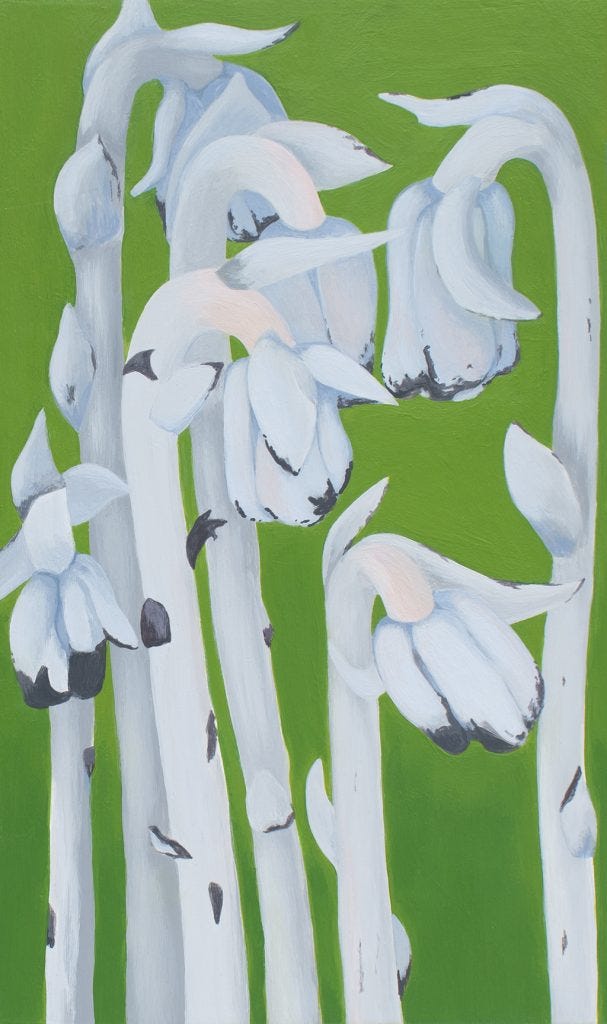
“Ghost Flower” (2022) 10″ X 6″ X 1 1/2″, acrylic on cradled wood panel $125
Ghost Pipe (Monotropa uniflora) is an unusual plant with no chlorophyll. It has a symbiotic relationship with a tree through a fungal network. Ghost Pipe, also known as Indian Pipe or Ghost Flower, is a powerful nervine. A tincture of ghost pipe can be used for pain or anxiety and as a sedative, particularly for extreme situations. It’s rare, so be sure to only harvest it sustainably if at all.
I came across Ghost Pipe for the first time on a camping trip in the Gifford Pinchot old growth forest. This miraculous plant was right in our camp spot. It is a beautiful and eerie looking plant with no green, just shades of white, grey, pink and black emerging right out of the earth like an alien! Yet it’s not alien, ghost pipe is indigenous to the forests of the Pacific Northwest. Because the ghost pipe plant has no chlorophyll and can’t make its own food, it relies on an underground fungal network to connect it to a tree with whom it exchanges nutrients. Quite amazing! The stem, leaves and flowers turn black as they age. Keep an eye out for these peculiar plants when hiking in old growth forests. I started this painting while sitting on the soft earth during that camping trip, right next to these ghost pipe flowers.
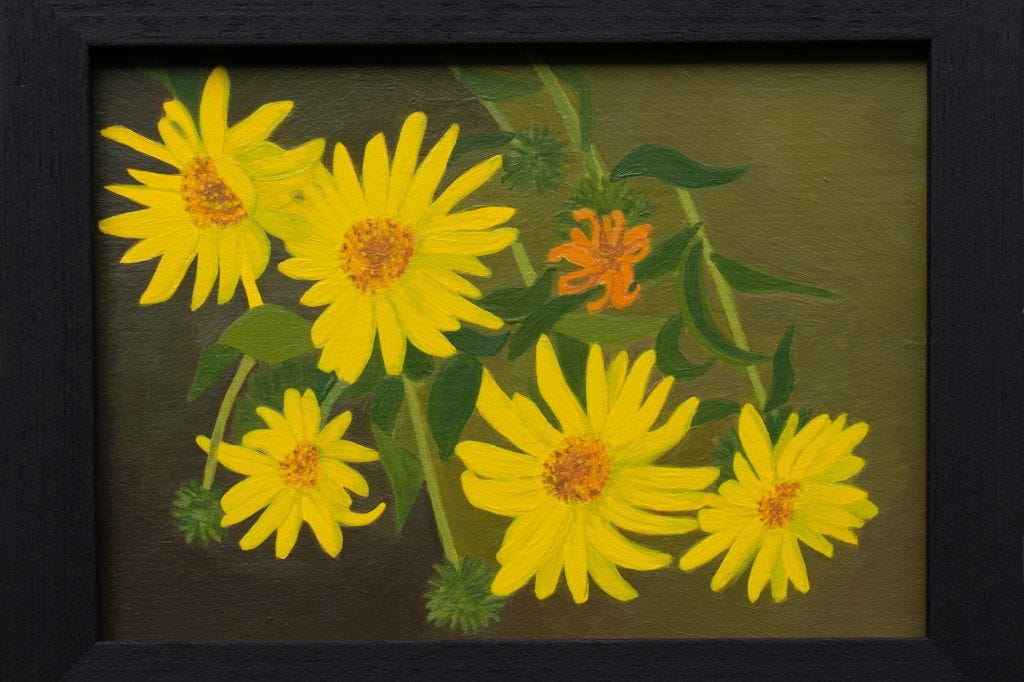
“Gumweed” (2025) 5″ X 7″, acrylic on wood panel, framed $85
Gumweed (Grindelia integrifolia) is native in the PNW. The leaves are used for respiratory issues such as asthma and bronchitis, the flowers and leaves can be eaten for anti-inflammatory and sedative effects, and extracts can be made into a paste for skin conditions like poison ivy and rashes. Indigenous people of the Willamette Valley used the plant as a medicinal food. The sticky resin was used as glue, and yellow and green dyes can be made from flowers and buds. Stems were dried for brooms!
I grow Gumweed in my Backyard Habitat garden, which is comprised mostly of plants indigenous to our area. I like growing the plants that would be growing here if it weren’t a city. It feels good to be surrounded by plants from the forest and the birds and pollinators that they support. Gumweed in the garden is gorgeous–bursting with brilliant gold flowers in late summer and fall. It’s been easy to grow in a sunny spot and requires little water.
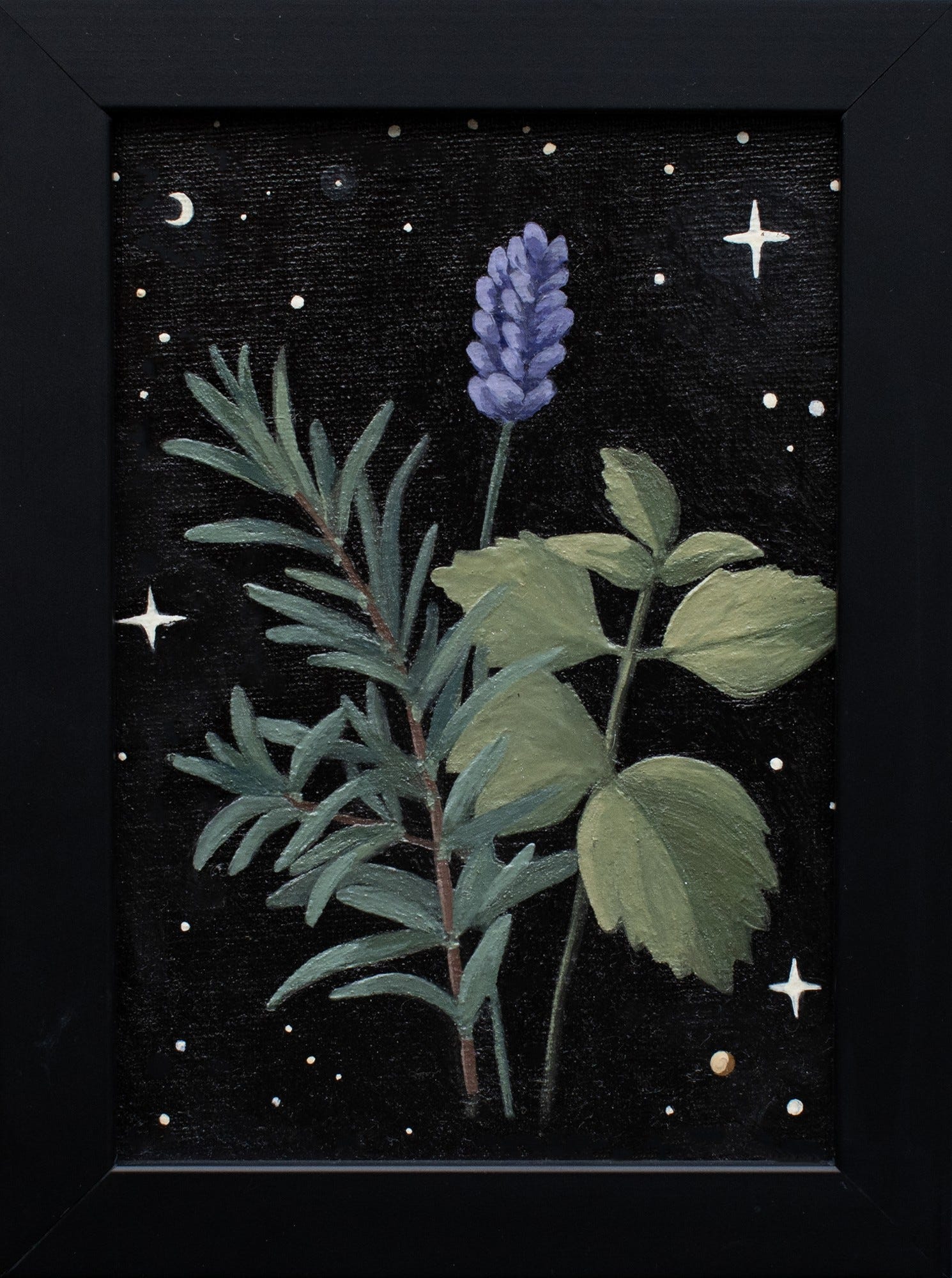
“Magical Healing Herbs” (2023) 7″ X 5″, oil on canvas panel, framed $85
Rosemary, Lavender & Lemon Balm are all easily grown in the garden. (Rosmarinus officinalis, Lavandula augustifolia, Melissa officinalis) Rosemary helps with memory, is antimicrobial, aids digestion and is good for a healthy scalp and hair. Lavender is calming, good for sleep, antimicrobial, and is good for wound healing. Lemon Balm is calming and good for sleep as well as uplifting and good for anxiety or depression. It reduces bloating and helps with cold sores.
These are three of my favorite medicinal plants to grow and use. It’s wonderful to be able to step outside the house to gather a few leaves for tea or cooking. Drying them for winter use is easy. It’s very satisfying to drink lemon balm & lavender tea all winter using herbs dried from the garden. They are all easy to grow in sun and require little water.
Contact me or check out the gallery website if you are interested in any of these paintings.
Sources: WA Native Plant Society, Wish Garden Herbs, Burke Herbarium, Plants of the Pacific Northwest Coast by Pojar & Mackinnon, Medicinal Herbs by Rosemary Gladstar
I’ve been making inks from certain plants lately… maybe a collaboration is in order Amy! Love this